2026 Summer Lecture Series banner


Summer Lecture Series 2026

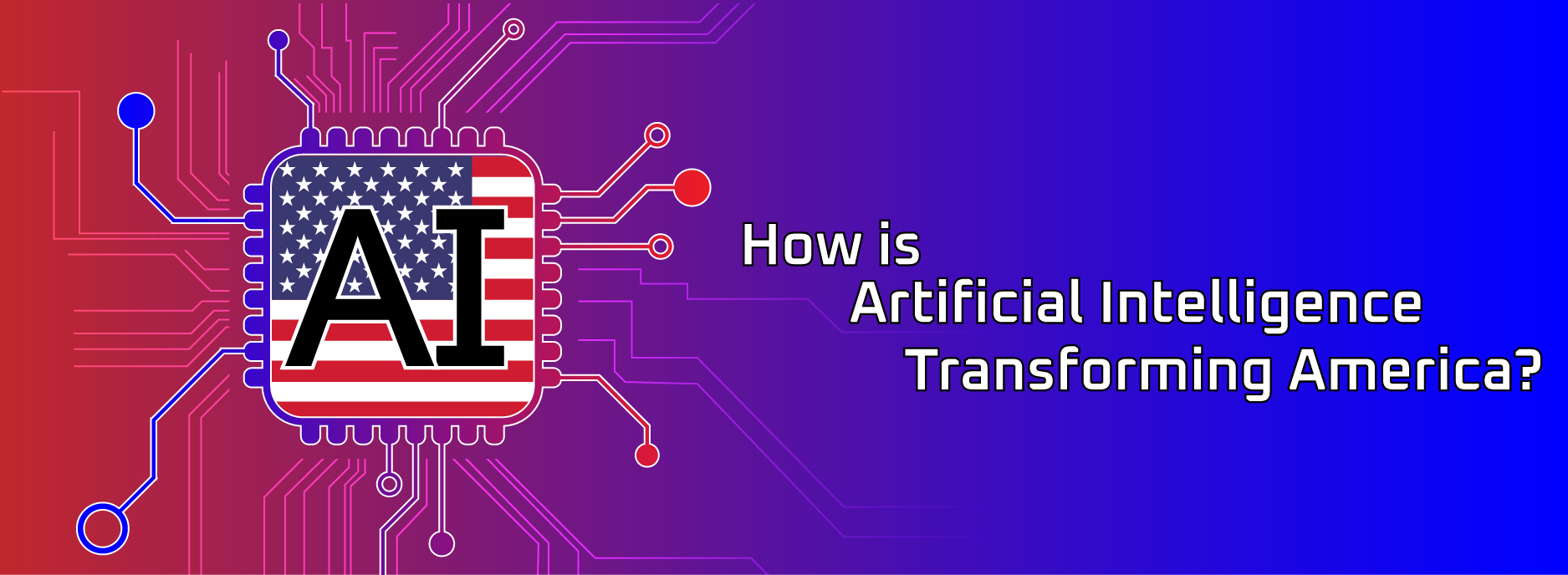
HOW IS ARTIFICIAL INTELLIGENCE TRANSFORMING AMERICA?

This year marks the 250th anniversary of the Declaration of Independence, a document drafted during a gathering of delegates from each American colony, who debated principles and ideas related to a new phase of government and self-determination. The Declaration states in its second paragraph, “We hold these truths to be self-evident…” 

This year is also the 70th anniversary of the 1956 Dartmouth summer research project, in which a small group of scientists gathered to study the conjecture that every aspect of learning or any other feature of intelligence can, in principle, be so precisely described that a machine can be built to simulate it. It was during this conference that the term “Artificial Intelligence” (AI) was first used.  

As our nation speeds into a new era of technological advancement, we are struggling with questions about truth and the influence of AI. No longer confined to research labs or Silicon Valley startups, AI has become a ubiquitous partner in our daily lives, summarizing information, generating images and text, supporting scientific breakthroughs, assisting with legal and medical research, and accelerating problem-solving in fields as diverse as climate science, economics, engineering, and the arts. Conversely, the high energy and water demands of its data centers, the fear of job displacement, ethical concerns regarding creative properties, and the potential erosion of privacy through surveillance and information access are issues that generate a sense of unease as this technology embeds itself deeper into our daily lives. Of utmost concern is the fact that AI has also become a tool used in the proliferation of disinformation and “deep fakes,” which can subvert our understanding of reality. What happens when truth is no longer “self-evident?”

AI has the potential to become a practical tool worth understanding, as well as a confounding puzzle when it comes to detecting truth. This year’s Summer Lecture Series will feature presentations by six experts across a wide range of fields, who will provide clarity, context, and confidence to anyone—novice and expert alike—in seeking to understand the benefits and challenges of Artificial Intelligence.

Wednesdays, 9:00 AM to 11:30 AM
July 8 - August 12, 2026
Lebanon Opera House, Lebanon, NH
OR Livestream

Registration will open later this spring!

Excited about this year's series? Enjoy some reading!

Several of this year's speakers have recommended some titles to help enhance your experience of the series. Visit our Book Recommendations page to learn about their suggestions!


Session 1, July 8
What Can the Declaration of Independence Teach Us About Artificial Intelligence?

Brinnae Bent

Executive in Residence in the Engineering and Professional Programs, 
Pratt School of Engineering at Duke; Director, Duke TRUST Lab

Brinnae BentBrinnae Bent is the Associate Director of the Society-Centered AI Initiative, the Director of the Duke TRUST Lab, and faculty in the Pratt School of Engineering at Duke University, where she teaches courses on Artificial Intelligence and Cybersecurity. She is a leader in bridging the gap between research and industry in machine learning, having led projects and developed algorithms for the largest companies in the world. More importantly, she has built algorithms that have meaningful impacts— from helping people walk to noninvasively monitoring glucose. Her current research explores questions like “how can explainable AI help in the conservation of endangered species?”, “how do we prevent your sleep monitor from getting hacked?”, and “how do we align AI systems with how humans think about concepts?” Dr. Bent actively contributes open-source tools and translates high-impact research into practice. Beyond research, Dr. Bent is deeply committed to education, and her education initiatives have been featured by OpenAI Academy, Backyard Brains, and CNET. She teaches advanced courses in explainable AI, deep learning, reinforcement learning, and cybersecurity, while also pioneering “K-100” outreach initiatives to bring engineering and data science to diverse audiences. She seeks to empower the next generation of thinkers who will shape ethical, impactful technology. Dr. Bent holds a BS from North Carolina State University and an MS and PhD from Duke University.

Session 2, July 15
Can AI Think Like a Doctor?

Adam Rodman

Assistant Professor, Harvard Medical School; Director of AI Programs, Shapiro Center for Research and Education, Beth Israel Deaconess Medical Center

Adam Rodman

Adam Rodman is a general internis­­­t and medical educator at Beth Israel Deaconess Medical Center and an assistant professor at Harvard Medical School. He is the Director of AI Programs for the Carl J. Shapiro Center for Education and Research, and he leads the steering group for integration of AI into the medical school curriculum. He is also an associate editor at NEJM AI, as well as a visiting researcher at Google DeepMind. His research focuses on medical education, clinical reasoning, integration of digital technologies, and human-computer interaction, especially with AI. His first book is entitled Short Cuts: Medicine, and he is the host of the American College of Physicians podcast Bedside Rounds

Adam completed his residency in internal medicine at Oregon Health and Science University in Portland, OR, and his fellowship in global health at Beth Israel Deaconess Medical Center while practicing in Molepolole, Botswana. He lives in Boston with his wife and two young sons.

Session 3, July 22

Dan W. Reicher

Senior Scholar, Stanford Doerr School of Sustainability; Senior Fellow, Dartmouth Irving Institute for Energy & Society

Dan Reicher

Dan Reicher is an entrepreneur, investor, policymaker, lawyer, and educator focused on clean energy and climate change. Reicher has served three U.S. presidents, testified before the U.S. Congress more than 50 times, led the launch of Google’s pathbreaking climate and clean energy work, oversaw a $1.2 billion annual clean energy R&D budget as U.S. Assistant Secretary of Energy, and co-founded the nation’s first investment firm focused exclusively on renewable energy project finance. 

Reicher served from 2011 to 2018 as founding executive director of the Steyer-Taylor Center for Energy Policy and Finance, a joint center of the Stanford Law and Business Schools. He is currently a Stanford Doerr School senior scholar, senior fellow at Dartmouth’s Irving Institute for Energy and Society, senior advisor with the Climate Adaptive Infrastructure Fund, and policy and business advisor. Reicher came to Stanford from Google, where he served since 2007 as Director of Climate Change and Energy Initiatives. 

Reicher’s federal roles include: Assistant Secretary of Energy for Energy Efficiency and Renewable Energy; Department of Energy Chief of Staff and Deputy Chief of Staff; Acting Assistant Secretary of Energy for Policy; a member of the Obama and Clinton presidential transition teams; a member of the Secretary of Energy Advisory Board; a member of the National Academy of Sciences Board on Energy and Environmental Systems; a staff member of the President’s Commission on the Accident at Three Mile Island; a law clerk to a federal district court judge; and a paralegal in the U.S. Department of Justice.

Before his position at Google, Reicher was President and Co-founder of New Energy Capital, the nation’s first investment firm focused exclusively on renewable energy project finance, and Executive Vice President of Northern Power Systems, one of the nation’s oldest renewable energy companies. Earlier in his career Reicher was as an Assistant Attorney General in Massachusetts and an attorney with the Natural Resources Defense Council. He was also an adjunct professor at Yale University, Vermont Law School and the University of Maryland.

In 2012 Reicher received an honorary doctorate from the State University of New York College of Environmental Science and Forestry and was also named one of the five most influential figures in U.S. clean energy by Oilprice.Com. 

Reicher holds a BA in biology from Dartmouth College and a JD from Stanford Law School. He also studied at Harvard’s Kennedy School of Government and MIT. An avid kayaker, Reicher was a member of the first expedition on record to navigate the entire 1888-mile Rio Grande (with support from the National Geographic Society) and to kayak the Yangtze River in China.

Session 4, July 29

Patrick Wheeler

Executive Director of the Center for Digital Strategies, Tuck School of Business at Dartmouth

Session 5, August 5
Is AI Leading Us Toward a More Dangerous World Disorder?

Michèle Flournoy

Co-Founder and Managing Partner, WestExec Advisors; Co-Founder and Chair, Center for a New American Security

Michèle Flournoy

Michèle Flournoy is Co-Founder and Managing Partner of WestExec Advisors, and a Co-Founder, former Chief Executive Oaicer, and now Chair of the Center for a New American Security (CNAS). Michèle served as the Under Secretary of Defense for Policy from February 2009 to February 2012. She was the principal advisor to the Secretary of Defense in the formulation of national security and defense policy, oversight of military plans and operations, and in National Security Council deliberations. She led the development of the Department of Defense’s 2012 Strategic Guidance and represented the Department in dozens of foreign engagements, in the media and before Congress.

Prior to confirmation, Michèle co-led President Obama’s transition team at the Defense Department. In January 2007, Michèle co-founded CNAS, a bipartisan think tank dedicated to developing strong, pragmatic and principled national security policies. She served as CNAS’ President until 2009, and returned as CEO in 2014. In 2017, she co-founded WestExec Advisors, a strategic advisory firm.

Michèle serves on the boards of CNAS, Booz Allen Hamilton, the Council on Foreign Relations, Amida Technology Solutions, and CARE. She serves on a number of advisory boards, including for The Leadership Council for Women in National Security, The Mission Continues, PIMCO, and Girl Security. She is a member of the Aspen Strategy Group. She is a former member of the President’s Intelligence Advisory Board and the CIA Director’s External Advisory Board, and the Secretary of Defense’s Defense Policy Board.

Michèle earned a bachelor’s degree from Harvard University and a master’s degree from Balliol College, Oxford University, where she was a Newton-Tatum scholar.

Session 6, August 12
How Can We Build Human Morality Into AI?

Walter Sinnott-Armstrong

Chauncey Stillman Distinguished Professor of Practical Ethics, Duke University

Walter Sinnott_Armstrong

Walter Sinnott-Armstrong was born in Memphis, Tennessee, and attended the Hotchkiss School, Amherst College (BA 1977), and Yale University (PhD 1982). He taught at Dartmouth College 1981-2009 and at Duke University since 2010.

Sinnott-Armstrong is Chauncey Stillman Distinguished Professor of Practical Ethics in the Department of Philosophy and the Kenan Institute for Ethics at Duke University with secondary appointments in Duke’s Law School and Department of Psychology and Neuroscience. He has served as co-chair of the Board of Officers of the American Philosophical Association.

Sinnott-Armstrong has published eight books, 21 edited collections, and over 250 articles and chapters in leading venues, including top journals in psychology, law, and philosophy. His research has addressed a wide variety of central issues in applied ethics, empirical moral psychology and neuroscience, epistemology, informal logic, and philosophy of law, religion, and psychiatry. His current focus is on moral artificial intelligence, political polarization, and various topics in moral psychology and brain science, including free will, consciousness, and moral responsibility. His popular trade books include Morality Without God?, Think Again: How to Reason and Argue, and Moral AI and How We Get There (with Jana Schaich Borg and Vincent Conitzer).

Sinnott-Armstrong co-teaches a Massive Open Online Course, Think Again, on the Coursera platform with over a million students registered. He co-directs Summer Seminars in Neuroscience and Philosophy, which trains philosophers in neuroscience and neuroscientists in philosophy. He is widely sought as a speaker on a wide variety of topics to both academic and public audiences.

PAST SUMMER LECTURE SERIES (SLS)

You can view sessions from previous years of the SLS on our YouTube channel!

Watch the 2025 SLS playlist

Watch the 2024 SLS playlist


Last Updated